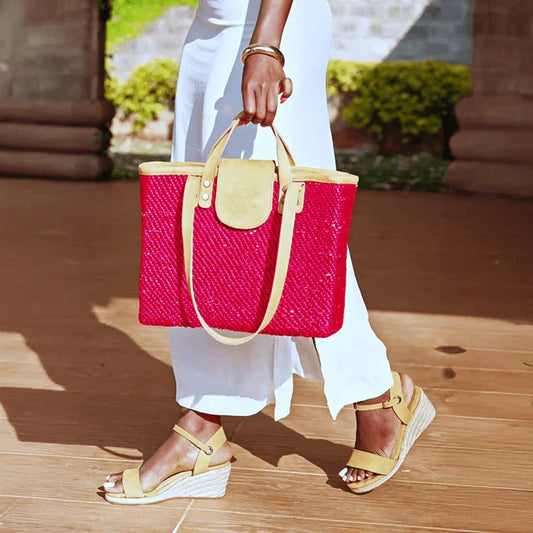
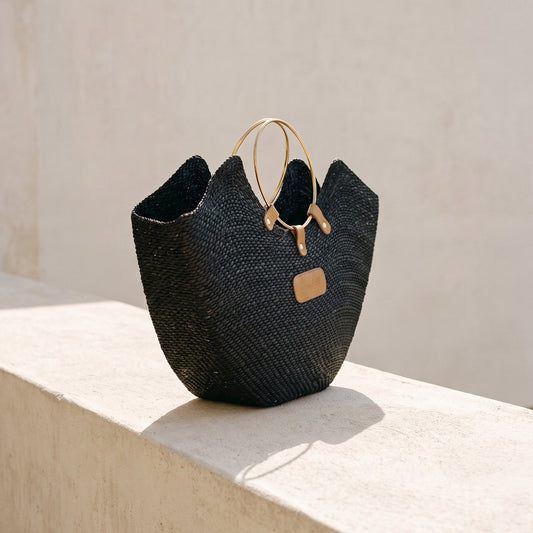
The Iringa Woven Tote Bags

Handwoven from natural seagrass by women artisans in Tanzania

Made from natural grass that's been harvested, dried, and woven by hand into a structure that holds its shape, travels light, and gets better with time. These are woven tote bags built for the beach, the market, and the kind of days that don't have a fixed plan. 

WHY THE NUMBERS ARE SMALL

Each batch is capped by how many bags our artisans in Tanzania can weave by hand in a single production run. Every one takes days to make. The number is small because the care is not.

When a style sells out, it closes. The women who made it move on to the next piece with the same intention.

Follow Us @MiriamBellaOfficial

  • Styled by @jodiflockart

  • Red woven straw beach bag with brass handles, held by a person in jeans and a white shirt.

    Styled by @sunkissedfolk

  • Red woven straw beach bag with brass handles, holding a water bottle, towel, and sunglasses.

    Styled by @sunkissedfolk

Every name we give a piece comes from the language of the women who made it.

  • Jua - Swahili for sun

    Named for open skies and warm days. Brass handles catch the light the way the word does — simply and without effort.

  • Bahari - Swahili for ocean

    Named for the sea the grass grows beside. Structured enough for the market, easy enough for the shore.

How a bag becomes a bag

1. Harvested by hand

Seagrass grows naturally along the East African coast. It's cut close to the root, gathered in bundles, and carried back to the workshop.

2. Dried in the sun

The grass dries for several days before weaving begins. This is what gives each strand its strength — nothing synthetic, nothing added.

3. Dyed by hand

Bundles of dried grass are submerged in black dye, the liquid dark and rich, the strands slowly absorbing the colour. It's this step that gives each bag its depth and contrast.

4. Sorted and selected

Strands are sorted by colour and texture. The women in our Tanzanian workshop have been doing this for years. They know by feel which pieces belong together.

5. Woven over two to three days

There's no machine that can replicate the tension of a hand-pulled weave. Each bag takes up to three days to complete. This is why no two look exactly alike, and why that's the point.

Jepchumba, a Kenya artisan at Miriam Bella, helping create handmade leather sandals and shoes.

JEPCHUMBA - QUALITY CONTROL

Jepchumba has worked in our Kenya workshop for three years. She's now head of quality control — the last set of eyes on every sandal before it ships. Her earnings helped fund her daughter's university fees. Her daughter is studying nursing.


When you buy a pair of Safari sandals, this is the chain of impact your purchase creates.